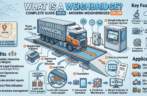


For industries that depend on the movement of raw materials, finished goods, minerals, agricultural products, or construction materials, an electronic weighbridge is more than just a weighing platform. It is a critical business tool that directly affects revenue, inventory management, customer trust, and regulatory compliance.
Many businesses focus on the size or price of a weighbridge, but overlook one important factor: accuracy. Even a small weighing error can create significant financial losses over time. An inaccurate industrial weighbridge may appear to function normally, but hidden discrepancies can accumulate into thousands of rupees in lost revenue every month.
Understanding these hidden costs helps businesses make better decisions when purchasing, maintaining, and calibrating their digital weighbridge systems.
Revenue Loss from Under-Weighing
When a truck carrying material is weighed below its actual weight, the business effectively gives away product without receiving payment for it.
Example:
- Actual load: 20,000 kg
- Recorded weight: 19,850 kg
- Difference: 150 kg
If this occurs across multiple vehicles every day, the cumulative loss becomes substantial. Industries dealing with aggregates, sand, coal, metal scrap, or agricultural commodities are especially vulnerable because material is sold by weight.
A small calibration error can silently reduce profitability without attracting immediate attention.
Over-Weighing and Customer Disputes
Inaccurate weighbridges can also record a higher weight than the actual load. This creates disputes with customers who may discover discrepancies when the material is re-weighed at another location.
Common consequences include:
- Delayed payments
- Rejected consignments
- Contract disputes
- Loss of repeat business
- Damage to company reputation
For logistics operators, trust in weighing accuracy is often as important as timely delivery.
Regulatory and Legal Risks
Many industries are required to comply with legal metrology and weight verification regulations. If a truck weighbridge is found to be outside the permitted tolerance range, the business may face:
- Fines and penalties
- Suspension of weighing operations
- Mandatory recalibration
- Inspection failures
- Additional compliance costs
For companies supplying government projects or large industrial clients, non-compliance can jeopardize future contracts.
Inventory Mismatches
Accurate weighing is essential for inventory control. When incoming or outgoing material is measured incorrectly, stock records become unreliable.
This can result in:
- Unexpected inventory shortages
- Excess stock accumulation
- Incorrect production planning
- Procurement errors
- Financial reporting inaccuracies
Manufacturing plants that rely on precise raw material consumption are particularly affected by weighbridge inaccuracies.
Operational Delays
An inaccurate electronic weighbridge often requires repeated weighing to verify results. This slows down vehicle movement and increases congestion.
Common operational impacts:
- Longer truck waiting times
- Reduced dispatch efficiency
- Increased fuel consumption
- Higher labor costs
- Lower daily throughput
For busy industrial facilities, even a few extra minutes per vehicle can significantly affect daily operations.
Hidden Maintenance Costs
Businesses sometimes postpone weighbridge maintenance to reduce expenses. However, neglected maintenance usually leads to larger repair costs later.
Problems that develop over time include:
- Damaged load cells
- Corroded junction boxes
- Cable failures
- Platform misalignment
- Water ingress
- Indicator malfunction
Routine servicing is generally far less expensive than replacing major components after a breakdown.
How Load Cell Errors Affect Accuracy
The load cells are the heart of any digital weighbridge. A single faulty load cell can distort the overall reading.
Signs of load cell issues include:
- Inconsistent weight readings
- Different readings for the same vehicle
- Sudden weight fluctuations
- Unstable display values
- Frequent calibration drift
Regular inspection of load cells helps identify problems before they affect business operations.
The Importance of Calibration
Calibration is not a one-time activity performed during installation. Environmental conditions, heavy usage, vibration, and wear can gradually affect weighbridge performance.
Recommended Calibration Schedule
| Usage Level | Calibration Frequency |
| Light usage | Every 6 months |
| Moderate usage | Every 3–4 months |
| Heavy industrial usage | Monthly or as recommended |
Regular calibration ensures that the electronic weighbridge continues to deliver reliable measurements throughout its service life.
Choosing the Right Weighbridge Manufacturer
Accuracy is influenced not only by maintenance but also by the quality of the original weighbridge design.
When selecting a weighbridge manufacturer in Tamil Nadu or elsewhere, consider:
- Certified load cells
- Robust platform construction
- Weather-resistant components
- Calibration support
- After-sales service
- Spare parts availability
- Installation expertise
A well-designed system maintains accuracy more consistently and reduces long-term operational costs.
Best Practices to Avoid Accuracy Problems
Follow these practices
- Schedule periodic calibration
- Inspect load cells regularly
- Keep the weighbridge platform clean
- Prevent water accumulation around the foundation
- Train operators to follow proper weighing procedures
- Maintain service records
- Address unusual readings immediately
Conclusion
The cost of an inaccurate electronic weighbridge is rarely visible in a single transaction. Instead, it appears gradually through revenue leakage, customer disputes, inventory errors, operational delays, compliance risks, and unexpected maintenance expenses.
Investing in a high-quality industrial weighbridge, performing regular calibration, and partnering with a reliable service provider can protect both profitability and operational efficiency. For businesses that weigh hundreds of tonnes of material every day, accuracy is not just a technical specification—it is a direct contributor to long-term business success.
FAQ‘s
1. How often should an electronic weighbridge be calibrated?
The ideal frequency depends on usage, but heavy industrial operations should typically calibrate monthly or according to manufacturer recommendations.
2. What causes inaccurate weighbridge readings?
Common causes include faulty load cells, poor calibration, platform misalignment, cable damage, and environmental factors such as water ingress.
3. Can a small weighing error create significant losses?
Yes. Even a difference of 100–200 kg per vehicle can accumulate into substantial financial losses when many trucks are weighed daily.
4. What is the role of load cells in a digital weighbridge?
Load cells convert the applied weight into electrical signals that the indicator displays as a weight reading. Their condition directly affects accuracy.
5. How can I improve the accuracy of my truck weighbridge?
Regular calibration, preventive maintenance, load cell inspection, and proper operator training are the most effective ways to maintain accurate weighing performance.